

The bald fade is a statement rather than a fad. This cut, which is crisp, piercing, and defined, skillfully mixes hair from skin level up into longer lengths. Yes, this sets good grooming apart from great grooming. The bald fade haircut is a basic style that’s worth understanding, regardless of whether you’re a customer trying to figure out what you’re asking for, a novice learning how to use clippers, or a professional barber hoping to perfect your fades.
Let’s discuss what makes the bald fade so peculiar, how to get it, and why perfecting it opens up a universe of creative cutting methods.
What Is a Bald Fade Haircut?
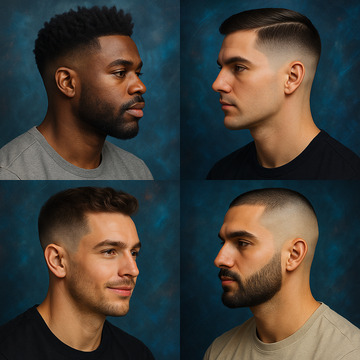
A bald fade is essentially a gradient haircut that tapers from the neckline, where the skin is fully shaven, to longer lengths higher on the head. The word “bald” describes the skin exposure, which means that the bottom part of the fade is completely removed, frequently with the aid of a straight razor or foil shaver.
What separates it from other fades?
Skin Fade: Although the terms are frequently used interchangeably, a bald fade normally refers to a cleaner shave using foil or razors.
Taper Fade: This type of fade is much more subdued and modest; it merely gets rid of hair around the ears and neck.
Drop Fade or Burst Fade: Rather than referring to the degree of baldness, these describe the shape of the fade.
Bald fades provide structure, contrast, and adaptability. It serves as the foundation for an endless number of hairstyles, whether you want something sophisticated for the boardroom or edgy for the studio.
Understanding Fade Levels: High, Mid, Low Bald Fades
There is no one-size-fits-all bald fade. Where the fade starts and how high it moves up the head define the range of styles.
High Bald Fade Haircut
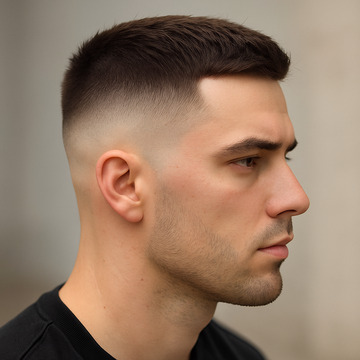
This starts just below the crown and curves aggressively above the temples.
Look: Sharp, striking, military-inspired
Best For: Oval faces, confident wearers, or anyone wanting max contrast
Watch Out: May expose scalp bumps or uneven shapes
Mid Bald Fade Haircut
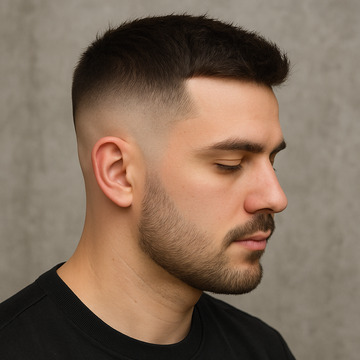
The midpoint fade is the most balanced. It starts around the top of the ears and curves neatly across the head.
Look: Clean, polished, not too flashy
Best For: Square or round faces, professional environments
Pro Tip: This is the most requested version in barber shops
Low Bald Fade Haircut
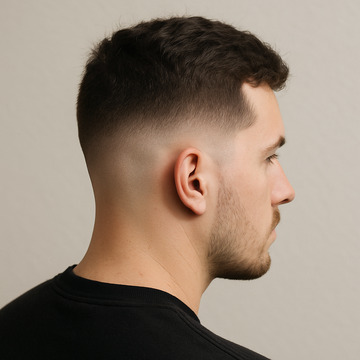
This sits just above the neckline and subtly tapers up.
Look: Understated, versatile
Best For: Heart-shaped faces, beginners trying fades for the first time
Ideal Use: Great for blending with longer styles on top
The cut’s character and graphical weight change with each fading level. Recommending the appropriate version is made possible by knowledge about head physique, hair density, and face structure.
Read More: The Mens Fade Haircut Everyone’s Asking For in 2025
Bald Fade Techniques: How Barbers Actually Do It
The goal of a bald fade is to create an undetectable gradient. Here is a step-by-step breakdown of the pro process:
- Map the Fade Zone: Draw the basic fade line using a trimmer. This indicates the beginning of “bald.”
- Remove the Bulk: Cut the bottom portion to the skin using clippers with no guard or a 0 guard.
- Foil Shave or Razor Finish: To achieve a truly bald close out, smooth off the lowest area with a foil shaver or straight razor.
- Create the Fade Guide Lines: Make stepping zones with various guards (0.5, 1, 1.5, etc.).
- Blend Between Lines: To make the sharp steps less noticeable, use lever adjustments or clipper-over-comb.
- Detailing: Hone the edges using the blade’s tip or trimmers. Add modifications such as part designs or line-ups.
Avoid:
- Rushing the blend – total chaos
- Using dull blades
- Not taking cowlicks or scars under consideration
Tools That Matter:
- High-performance clippers (e.g. Wahl Senior, Andis Master)
- Foil shaver (BabylissPRO, Andis ProFoil)
- Detailing trimmers
- Neck brushes and fade combs
Patience and steady flicking action (not merely power tools) are the foundation of great fades.
What to Ask Your Barber (So You Don’t Regret It)
Don’t just get in the saloon and ask, “Give me a fade.” That is potentially risky and misleading. Here’s how to express your desires:
- Specify the level: “I want a low skin fade” or “I want a mid-bald fade.”
- Choose the top: “scissor cut on crown and clippers on flanks” or “keep the top about 2 inches.”
- Combining a beard or not: “Leave the beard apart” or “Fade into my stubble.”
- Share a picture; it eliminates any uncertainty.
Barbers love it when clients come prepared. Clear input = better output.
Styling on Top: Best Haircuts That Pair With Bald Fades
The entire haircut isn’t a bald fade. What’s on top changes the appearance. The following looks go well with a clean fade:
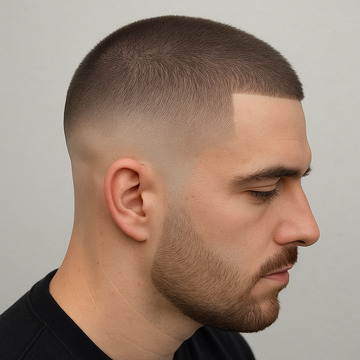
Buzz Cut: Timeless military sharpness, especially with a line-up
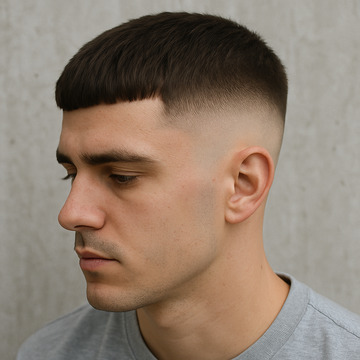
Crop Top: Great for texture lovers and low-maintenance wearers
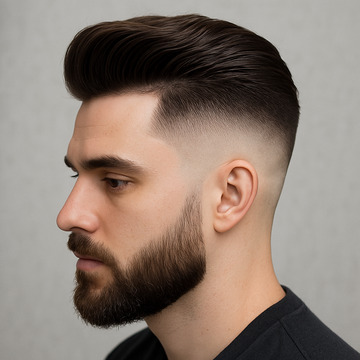
Pompadour: Combines classic volume with modern fade
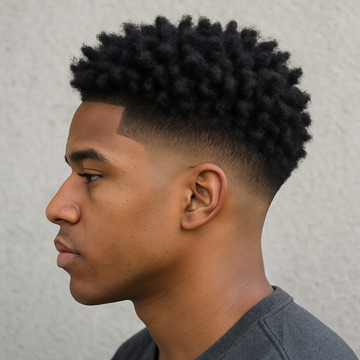
Twist Sponge or Curls: Adds dimension and contrast, especially for Black men
Slick Back or Comb Over: Business at the top, fade at the sides
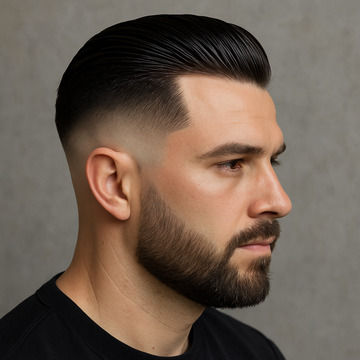
Mohawk or Burst Fade Variation: High drama, youthful energy
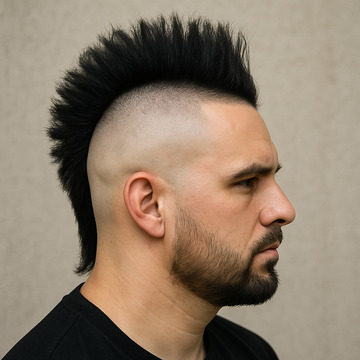
Barbers can improve their work by understanding how to blend the length of the top with the fade. Besides, selecting the appropriate top style is essential for customers to confidently own the fade.
Read More: Bald Fade Haircut: A Complete Guide to Low, Mid & High Styles for Every Hair Type
Bald Fades by Hair Type and Texture
Different hair types respond differently to fading. Adjust your method precisely:
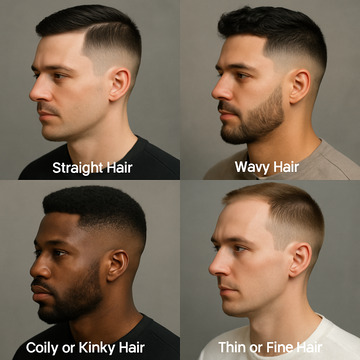
- Straight Hair: Shows imperfections clearly. Blend slowly.
- Wavy Hair: Use wide-tooth combs to manage curl while blending.
- Coily or Kinky Hair: Clippers must be sharp, and foil finish is essential. Moisturizing is key.
- Thin or Fine Hair: Stick to lower fades to prevent patchwork exposure.
Maintenance Tips for Clients and Stylists
A bald fade looks best fresh, but it can fade quickly if not maintained.
For Clients
- Retouches every two to three weeks. This is not a one-time event. As hair grows back, the fade quickly loses its defined look.
- Moisture your scalp! Your look is ruined by dry, flaky skin at the base. Apply a little moisturizer or cream after shaving.
- Line-ups are important. A shape-up around the edges maintains things sharp even if you’re not ready for a complete fade.
- Nightly schedule? Use a hat or durag to preserve the pattern if your hair is coarse or has waves.
For Stylists
- Provide weekly packages for shape-ups.
- Suggest hair products that are particular to fading.
- Inform customers about post-fade care.
- Plan loyalty discounts to promote return business.
Cultural Influence and Popularity of Bald Fades
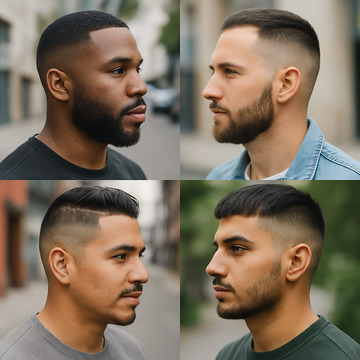
Originally inspired by military haircuts in the 20th century, the bald fade gained popularity as a street style mainstay in the 1990s. Currently, it is worn by:
- Consider Big Sean, Drake, and Nas as examples of hip-hop artists.
- Sportsmen: NBA and NFL locker rooms are dominated by crisp line-ups and clean fades.
- Business Experts: Bald fades go nicely with fine shirts and suits.
- It is fashionable but manageable for children and teenagers.
The way the bald fade transcends cultural boundaries is intriguing. Grooming status is important in some communities. For others, it’s about pride in one’s culture.
Conclusion: Why the Bald Fade Stays Timeless
Fade Haircut is a daily necessity in contemporary grooming, as well as a profession and design. Knowing the bald fade provides you the tools for bettering your style or service, whether you’re standing behind the barber’s chair or in it.
Are you prepared to give one a try? Or prepared to offer one? In any case, the bald fade will help you maintain your standards high and clean.
Read More: Who Invented the Fade Haircut?
FAQs
What makes a fade different from a bald fade?
A conventional fade blends into short hair without showing the scalp; however, a bald fade tapers down to the skin.
What is the term for a bald fade haircut?
Another name for it is a skin fade or zero fade.
What is the number for a bald fade?
It fades up to longer clipper lengths from zero or no guard.
Why would you want a bald fade?
By revealing the scalp at the bottom and progressively mixing up, it produces a crisp, striking contrast.
How does a bald fade appear?
A smooth gradient is produced as it progressively blends into longer hair after being shaved at the base.
How much time does a bald fade last?
It requires a touch-up within two weeks after looking sharp for five to seven days.
How can one request a bald fade?
State, “I’d like a bald fade,” and then indicate whether you want the fade to begin low, mid, or high.
Does a bald fade make sense?
Yes, if you’re looking for a sleek, defined style that complements the majority of contemporary head shapes and styles.
Which facial shape looks best with a low bald fade?
It creates balance and slims the sides, making it ideal for round, square, and oval faces.
A zero bald fade: what is it?
This type of fade begins at clipper level zero, removing all stubble and cutting hair to the skin.
What is the appearance of a bald fade haircut?
At the base, it is entirely shaved, and on top, it progressively blends into greater lengths. smooth and clean.

